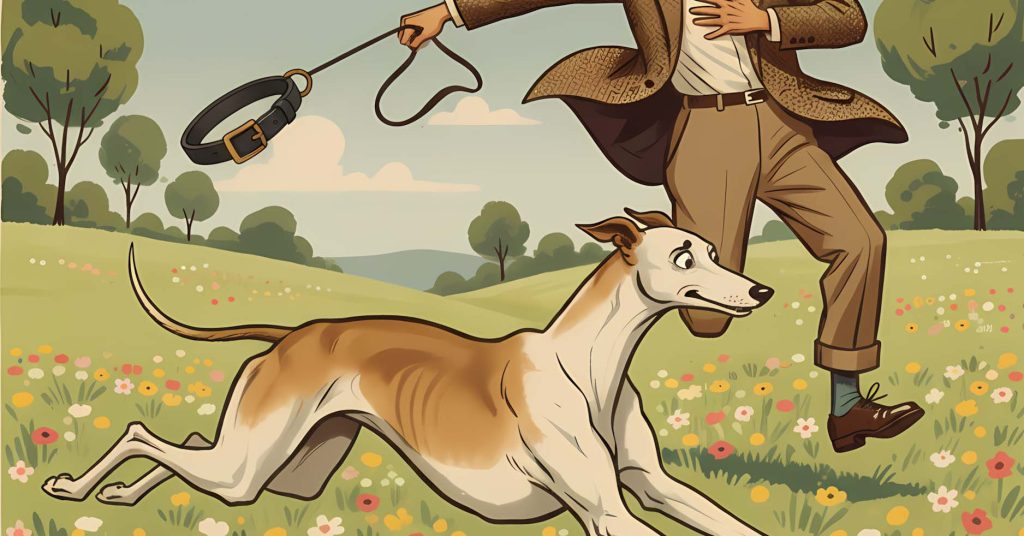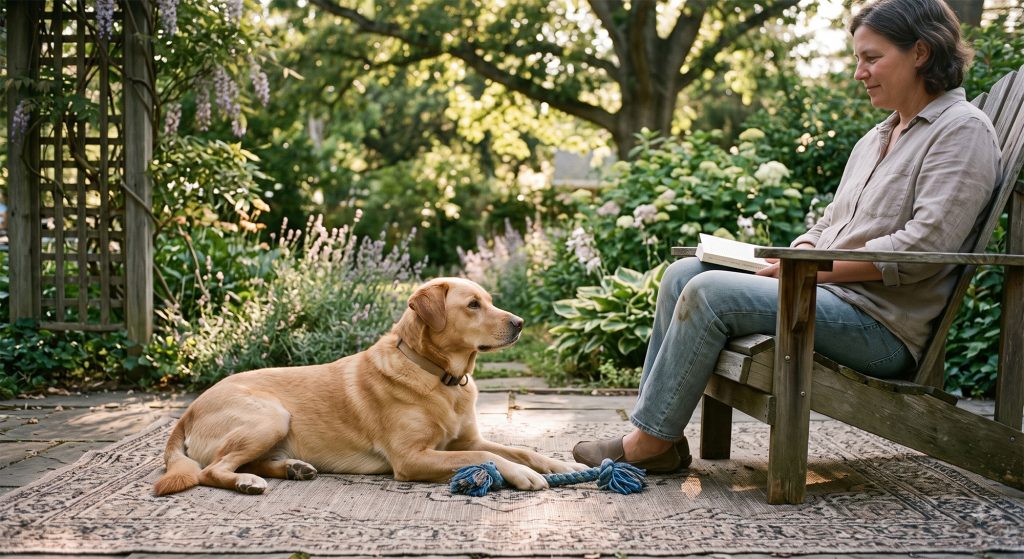
A dog ignoring a ball is information, not a failure. It does not mean your dog is boring, broken, lazy, or secretly waiting for you to buy the one magical toy that unlocks their personality. Very often, it just means fetch is one activity among many, and this dog may be telling you something useful about how they prefer to engage.
That distinction matters because play is broader than the standard picture many owners grow up with. In a review of canine play, researchers note that domestic dogs can play socially with humans, socially with other dogs, and asocially with objects (Bradshaw, Pullen & Rooney, 2015). Fetch fits inside that wider landscape. It is not the definition of play.
The same review also points out that different forms of play are not all doing the same thing in the same way. Dog-dog social play, dog-human play, and object play can have distinct structures and motivations (Bradshaw, Pullen & Rooney, 2015). That is useful for owners because it softens the pressure to treat one activity as a universal benchmark. A dog who does not light up for a ball may still engage differently: with a person, another dog, or an object.
In other words, “does my dog like fetch?” may be too narrow a question. A better one is “what kind of play does my dog choose when nothing is being forced?”
Context matters here too. Research in puppies found that object play can appear in both solitary and social forms, and that developmental patterns differed across the breeds and ages studied (Davis et al., 2023). That is not a licence to build a rigid theory about every pet. It is simply a reminder that play can look different depending on the dog, the setting, and the moment.
Another study in the validated package let dogs freely explore familiar and novel toys and found a subgroup difference in how often some dogs interacted with a caretaker while holding a toy (Sommese et al., 2026). Again, the modest lesson is not that every dog belongs in a fixed “toy personality” box. The useful lesson is that observation under low pressure can reveal different patterns of engagement.
What does your dog choose?
Try this as an observation card rather than a test:
- Carries or mouths an object
- Chases movement
- Invites a person into play
- Prefers a dog playmate
- Explores an object alone
- Disengages quickly
The point is not to score your dog or force them into a category. The point is to watch what they volunteer.
That may sound obvious, but owners often do the opposite. We repeat the same game because it is familiar, socially validated, or easy to imagine in advance. Ball equals fun. Tug equals confidence. Puzzle equals enrichment. The trouble starts when we turn those ideas into absolutes. If the dog declines the ball, we assume they are not playful. If they mouth an object and walk away, we decide the toy “failed.” If they want a few seconds of social play and then disengage, we read it as a problem instead of a preference.
Low-pressure observation helps because it makes room for variation. Try short sessions on different days. Notice what your dog voluntarily returns to, and what they leave alone. You are not searching for a permanent label; you are simply paying attention beyond one frustrated game of fetch.
The point is simple: play comes in more than one form. No single game gets to decide whether a dog is playful.
There is a quiet safety boundary worth keeping too: choose activities appropriate to the dog and supervise interaction as appropriate to the item and the dog. That boundary does not require a lecture. It just keeps observation grounded in common sense.
The nicest thing about abandoning fetch as a universal standard is that it makes owners better listeners. Some dogs want the social spark of a person joining in. Some want to chase. Some want to carry something proudly for ten seconds and call it done. Some would rather inspect, mouth, and move on. Some disengage quickly because that particular setup simply is not compelling to them today.
None of that means the dog needs to be fixed. It means the dog has already answered the question in front of you.
So if your dog ignores the ball, let that be useful information rather than bad news. Watch what they choose instead. Repeat the observation on another day. Keep the pressure low. Over time, you will usually learn more from the dog’s volunteered play than from trying to turn fetch into a personality test.